
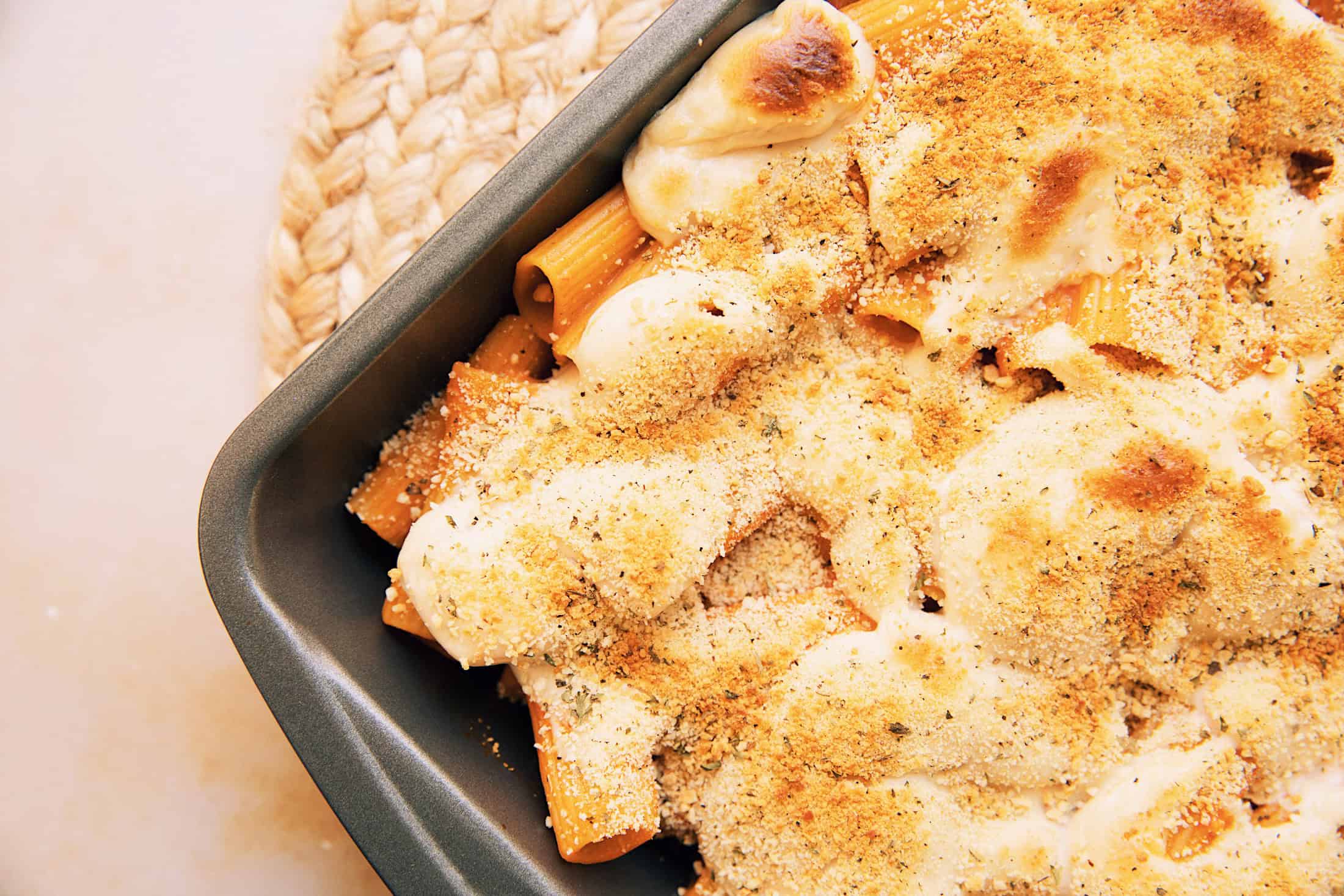
This vegan baked gochujang rigatoni is one of those recipes that feels impossible to describe without just making someone taste it. It's creamy, spicy, and deeply savoury with a crispy breadcrumb topping that takes it from weeknight pasta to full-on dinner party showstopper.
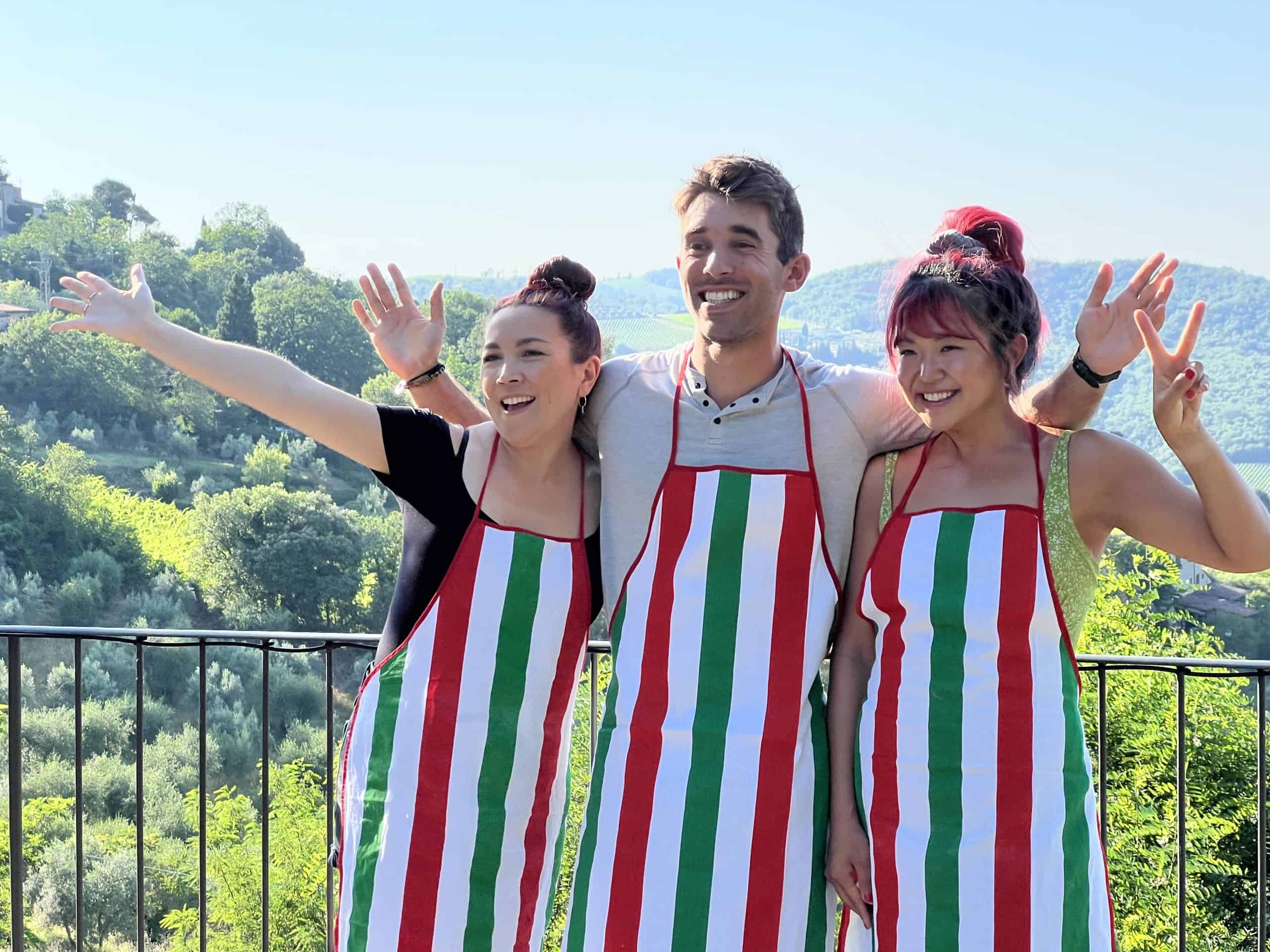
I created this dish during my trip to Panzano, Italy with The Getaway Co. for Vegan Roots In Italy. This was a week-long vegan holiday I co-hosted from June 24 to July 1, 2023 alongside plant expert Nick Cutsumpas and vegan YouTuber Rose Lee from Cheap Lazy Vegan.
Jump to:
a once in a lifetime collab
Part of what made this trip so special was the cooking experiences we hosted for the participants. Our first event was a hands-on gnocchi-making class that I lead, and then Rose and I hosted a second experience where we really wanted it to be a true mashup of our two worlds. Hence, vegan baked gochujang rigatoni!
We combined Rose's go-to gochujang pasta. It's simple, spicy, intensely flavourful, and used my creamy mozza sauce from Vegan Comfort Classics and elevated the whole thing into a baked casserole with a golden, crispy breadcrumb topping. Korean-Italian fusion at its finest, born in a Tuscan villa!
what is gochujang?
If you haven't cooked with gochujang before, this recipe is the perfect introduction. Gochujang (고추장) is a Korean fermented chili pepper paste with a flavour profile that goes way beyond just heat. It's spicy, but it's also deeply savoury with a subtle sweetness that comes from the starch of cooked glutinous rice fermented into the paste. It also contains garlic and fermented soybeans, which give it that rich, umami depth you'll want to put on everything.
You'll typically find it sold in rectangular red tubs at Asian grocery stores, and increasingly at mainstream stores all over. Once you have a tub in your fridge, you'll find yourself reaching for it constantly. (Looking at you, crispy gochujang cauliflower bibimbap.)
hot tip: Gochujang heat levels vary by brand. If you're sensitive to spice, start with less and taste as you go. You can always add more.
why this pasta bake works so well
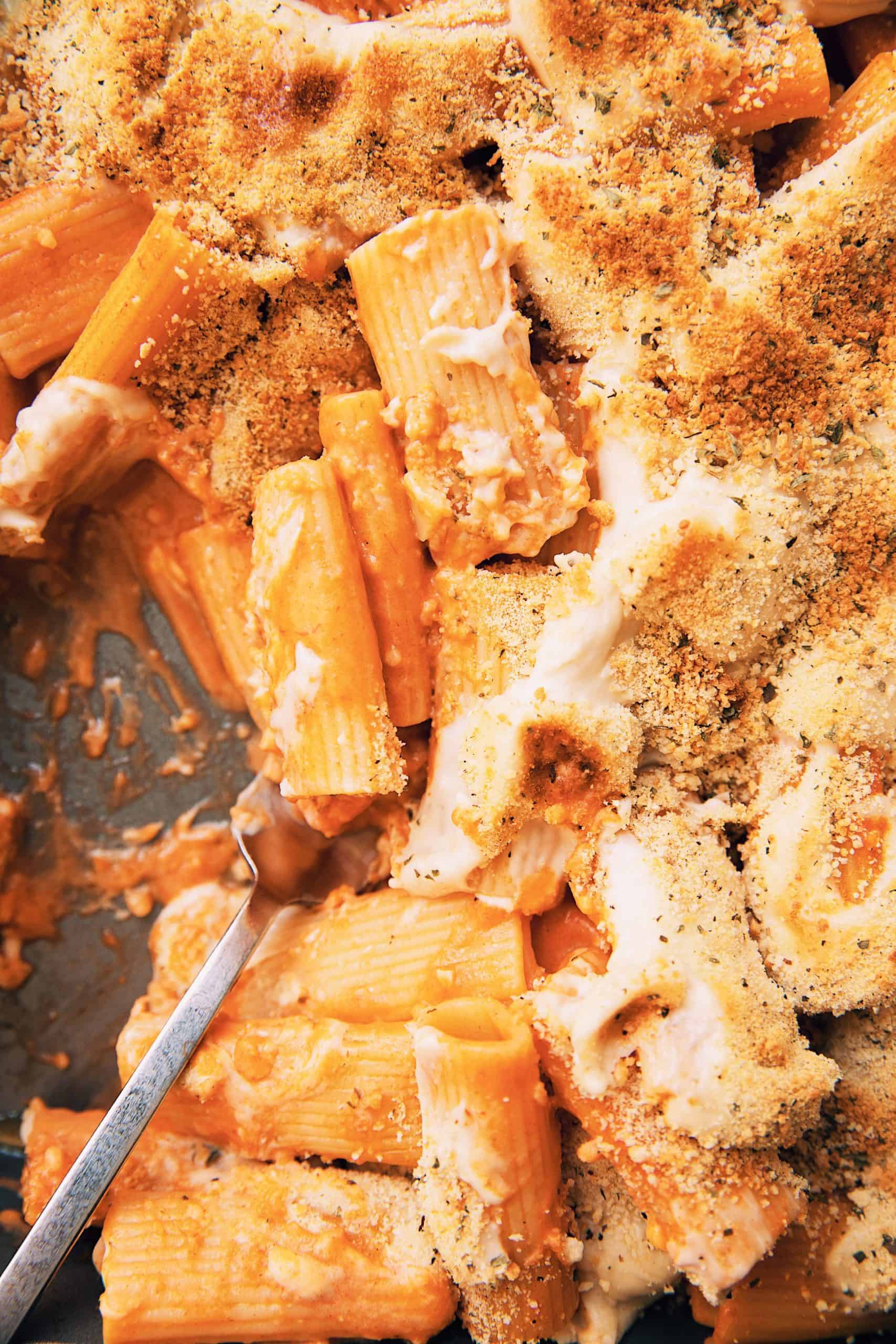
The magic of this dish is in the combination. Gochujang brings bold, fermented heat. The vegan mozza sauce (from my cookbook Vegan Comfort Classics) adds that stretchy, creamy, indulgent richness. Rigatoni is the ideal pasta shape here because those ridges and hollow tubes hold onto every bit of sauce. And then the breadcrumb topping? That contrast of crispy against creamy is what pushes this over the edge.
Unlike a quick stovetop gochujang pasta, baking it transforms the dish entirely. The sauce thickens, the flavours meld, and the top gets that gorgeous golden crust that makes it feel special and comforting!
tips for making this recipe
- leftovers reheat beautifully. Store in an airtight container in the fridge for up to 4 days. Add a small splash of water when reheating to loosen the sauce.
- don't skip the breadcrumb topping. It's the textural moment that makes this a bake rather than just a pasta. And I recommend using panko for maximum crunch.
- cook your rigatoni just shy of al dente before baking. It will continue to cook in the oven, and you don't want it to go mushy.
- adjust the gochujang to your spice preference. This recipe has a medium heat level. For a milder version, start with less and taste the sauce before adding more.
more recipes you'll love
If you love the flavours in this dish then you'll want to try these too!
- crispy gochujang cauliflower bibimbap is a hearty Korean meal that also uses gochujang.
- vegan margherita pizza is the recipe where the creamy mozza sauce all started!
- vegan dan dan noodles is a Chinese recipe, but you could add gochujang to the mix here if that's what you have on hand.
frequently asked questions
Gochujang is a Korean fermented chili pepper paste made from chili powder, glutinous rice, fermented soybeans, and salt. It has a complex flavour that is spicy, slightly sweet, and deeply savoury. It's a pantry staple in Korean cooking and adds incredible depth to pasta sauces.
Yes! You can assemble the casserole up to a day ahead and refrigerate it unbaked. Ensure all the components are cooled completely before assembling it and add the breadcrumb topping just before baking so it stays crispy.
This baked gochujang rigatoni has a medium heat level. The cream sauce tempers the gochujang's spice, but you can easily adjust the amount of gochujang used to suit your spice preference.
Rigatoni is ideal. The ridges and hollow tubes trap the sauce perfectly. Penne or ziti are good substitutes, if needed.
This recipe is not gluten-free as written, but you can substitute a gluten-free rigatoni or penne and use gluten-free panko breadcrumbs to adapt it.
vegan baked gochujang rigatoni
Ingredients
vegan mozza sauce
- ½ C raw cashews (soaked for 20 minutes in hot water)
- 1 C unsweetened soy or oat milk
- 1 tablespoon tapioca flour
- 1 teaspoon nutritional yeast
- ½ teaspoon sea salt
- ½ teaspoon garlic powder
- ¼ teaspoon onion powder
- ¼ teaspoon ground white pepper
- 2 teaspoon lemon juice
gochujang rigatoni
- 1 lb rigatoni
- 2 tablespoon olive oil
- 2 tablespoon all-purpose flour
- 2 C unsweetened soy or oat milk
- 2 tablespoon minced garlic
- 4 tablespoon tomato paste
- 4 tablespoon Korean gochujang fermented paste (use 2 tablespoon for mild)
topping
- ⅓ C panko breadcrumbs
- finely chopped Italian parsley, as garnish
Instructions
- To make the mozzarella sauce, drain the soaked cashews from the soaking water and rinse well. Add to a high-powered blender, like a Vitamix, with the remaining ingredients and blend until very very smooth. No bits of cashews should remain. Pour the mixture into a saucepan and heat over medium-low heat whisking constantly for about 4 to 5 minutes until it thickens and is gooey. Remove from the heat.
- Meanwhile, cook the rigatoni in a large pot of salted water. Drain but do not rinse. Reserve a cup of starchy pasta water before draining.
- Heat olive oil and all-purpose flour in a large pan over medium heat. Use a flat wooden spatula to stir it around until it thickens into a roux, cooking for about 5 minutes. Slowly pour the soy or oat milk in while continuing to push the mixture around with the wooden spatula or whisk to get it well combined. Continue to cook over medium heat until it becomes slightly thicker.
- Add minced garlic, tomato paste, and gochujang stirring well to combine. Continue cooking the sauce for about another 5 to 8 minutes. Add more nondairy milk and/or some starchy pasta water, a small portion at a time, if the sauce becomes too thick. Cook longer if it's too thin.
- Lower the heat on the pan of sauce, and toss in the cooked rigatoni. Combine until well coated in the sauce. If you feel it needs some reserved starchy pasta water to thicken and coat the pasta, add a little bit at a time, while continuing to heat it over low.
- Lightly coat a 9 x 13-inch baking dish with olive oil. Add the sauced pasta to the baking pan. Dollop the mozza sauce all over the top. It won’t be a thick even layer but will cover almost all of the top of the pasta. Then add bread crumbs evenly on top.
- Bake in an oven preheated to 400°F for 15 to 20 minutes until bubbling. Broil for 5 to 8 minutes to get the top browned and bubbling, if needed. The top should be browned and the mozza slightly puffed.
- Before serving, garnish the top of the baked pasta with finely chopped parsley.



Lauren Toyota
Lauren is a plant-based powerhouse, a former TV host turned wildly successful food creator, best-selling cookbook author, and the woman responsible for making vegan comfort food a thing worth craving. Through her blog and YouTube channel, hot for food, she’s amassed a dedicated following by recreating all the nostalgic, indulgent dishes we love—mac & cheese, burgers, cinnamon rolls—but making them entirely plant-based. No compromise on taste, no weird ingredients, just damn good food.